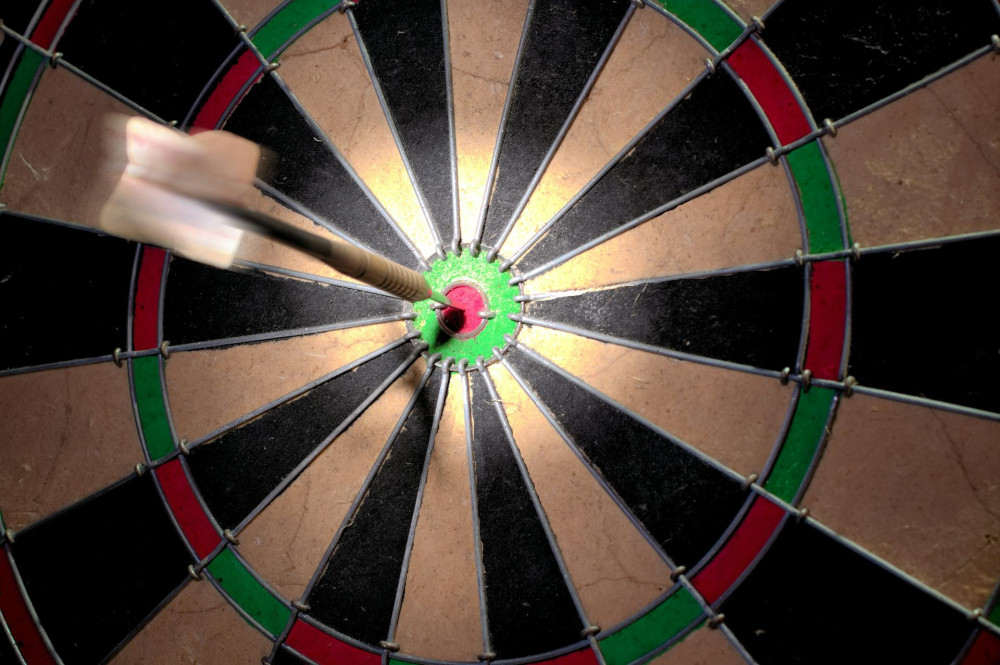
Dart Statistics Explained: From Basic Numbers to In-Depth Insights


Dart Statistics Explained: From Basic Numbers to In-Depth Insights
Darts is a game where precision, strategy, and mental toughness come together in a unique balance. Behind every throw and celebration lies a world of numbers that reveal far more than what meets the eye. Today, dart statistics aren’t just for commentators and analysts—they’re tools for players and fans who want to understand the game on a deeper level. Here’s a breakdown of the most important stats, from the basics to the advanced metrics that separate the world’s best from the rest.
The Basics: Averages and Checkout Percentage
When you watch a darts match, the first number you’ll often hear is a player’s average—usually expressed as a three-dart average. This shows how many points a player scores on average per turn (three darts). For example, an average of 100 means the player typically scores 100 points every three darts thrown.
A high average indicates consistency and accuracy, but it’s not the whole story. The checkout percentage—how often a player successfully finishes a leg when given the chance—is just as crucial. A player might score heavily but still lose if they miss too many doubles at the end of legs.
As a general benchmark, professional players often average between 90 and 105, while a solid checkout percentage typically falls around 40–50%.
180s, 140s, and Consistency
Another fan-favorite stat is the number of 180s—the maximum score possible with three darts (three triple 20s). It’s a symbol of power scoring and often used to measure how aggressively a player scores.
But while 180s are exciting, they don’t always win matches. Stats like 140s and 100+ scores show how consistently a player maintains a high scoring level. A player who regularly hits 100s and 140s can be more dangerous than one who hits many 180s but mixes them with too many low-scoring turns.
Consistency is key—and that’s where more advanced statistics start to reveal deeper insights.
Advanced Metrics: First 9 Average and Doubles Efficiency
To understand how a player builds a leg, analysts often look at the First 9 Average—the average score over the first nine darts of each leg. This shows how quickly a player gets down to a checkout range. A high First 9 Average means the player applies pressure early and often gets the first chance to finish.
Another important metric is Doubles Efficiency, which measures how effectively a player hits doubles when given the opportunity. It’s a more detailed version of the checkout percentage, tracking how many darts are used per successful finish. A player who averages fewer than two darts per double attempt has a significant edge.
Momentum and Pressure: The Invisible Side of the Game
Darts isn’t just about mechanics—it’s also about handling pressure. That’s why analysts increasingly focus on pressure statistics, which show how players perform in critical moments. These might include how often a player hits a double when the opponent is waiting on a finish, or how frequently they break their opponent’s throw.
These numbers reveal who has the mental strength to deliver when it matters most. Some players may have lower averages overall but perform better in clutch situations—and that can be the difference between victory and defeat.
Læs også:



Data Analysis in Modern Darts
As darts has become more professional, the use of data has exploded. Major tournaments like the PDC World Championship and Premier League Darts generate massive amounts of statistical data, analyzed by coaches, players, and fans alike.
With modern software, analysts can map a player’s tendencies—such as which doubles they hit most often or which segments they tend to miss. This allows for targeted practice and strategic preparation against specific opponents.
Some players even use data to fine-tune their throwing rhythm or technique, based on how their scoring patterns change throughout a match.
How You Can Use Dart Statistics Yourself
Even as a casual player, tracking your own stats can be incredibly useful. By recording your averages, checkout percentage, and number of 100+ scores, you can quickly see where you’re improving—and where you need to focus your practice.
If you’re interested in darts betting, statistics can also help you make more informed decisions. A player with a lower average but a high checkout percentage might be more reliable than one who scores heavily but struggles to finish legs.
In short, statistics help you look beyond the final score and understand why a player wins.
From Numbers to Insight
Dart statistics may seem like dry numbers, but they tell stories of precision, pressure, and personality. They show how tiny margins decide big matches and how the best players combine technical skill with mental resilience.
Whether you’re a fan, a player, or just curious, understanding the numbers behind darts can give you a whole new appreciation for the game—and maybe even inspire you to take your own throws a little more seriously.
Læs også: